Ø 固态材料的运输物理学
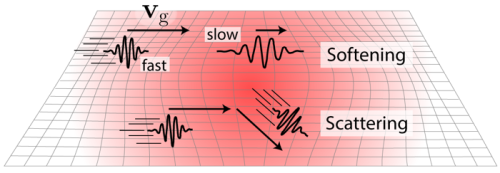
我们致力于发展理论模型,揭示复杂多相材料中电子和声子的传输机制,为热工材料的设计和优化提供理论指导。
Transport physics of Solid-State materials
Predictive modeling of electronic and thermal transport properties of semiconductors and composites. We aim to develop physical model to reveal the electron/ phonon transport in materials containing multiple phases. The model can then guide the rational design and optimization of thermal engineering materials.
Ø 材料工程:纳米技术和界面工程
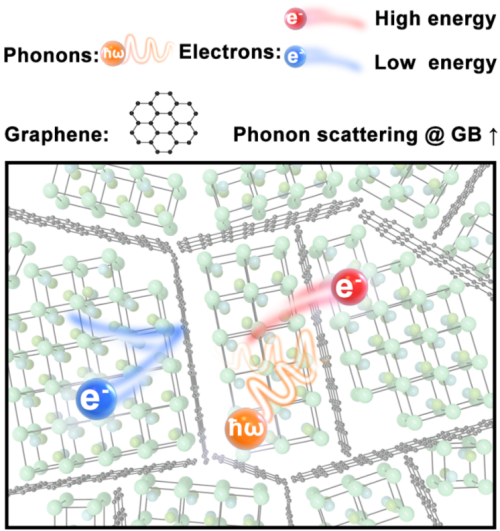
我们的研究重点是开发新型纳米材料及纳米结构,以此作为调控电子和声子传输的平台,从而实现电热特性的高效调控。
Material engineering: nanotechnology and interface engineering
programmable design of novel three-dimensional (3D) structures consisting of nanomaterials(nanowires, nanofiber, two-dimensional(2D) nanomaterials, etc.) can lead to various specific properties and functionalities. We focus on novel assembling/composite strategies, as well as utilizing nanomaterials as an interface engineering tool. The nanostructure-bulk property evolution is what we devote to exploring, aiming at providing pratical tools for manipulation of electron/ phonon transport and thus electronic and thermal properties.
Ø 纳米复合材料的热加工应用
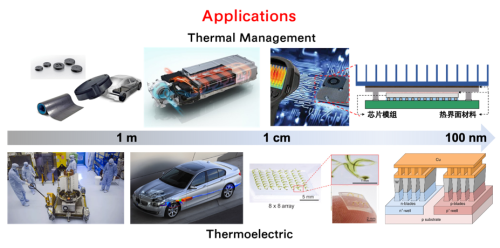
我们探索热电材料将废热转换为电能的可能性,并针对电池、电子芯片和冷却系统的热管理挑战,开发出新的材料设计和合成策略,提升材料的热管理能力。
Thermal engineering application of nanocomposites
Hierarchical engineering principles for design of thermal to electric power generation and thermal management materials systems. Waste heat is ubiquitous side product of most energy usage cycles. Use of thermoelectric (TE) material to convert wasted heat to electricity is a promising solution. Meanwhile, thermal management is important in the rapid development of batteries, high-power electronic chips, and automobile cooling systems. Even minor upgrades in system efficiency often bring about great challenges in heat dissipation. We are exploiting novel composite design and synthesis strategies to improve the performance for TE materials or thermal management materials (such as thermal interface materials).